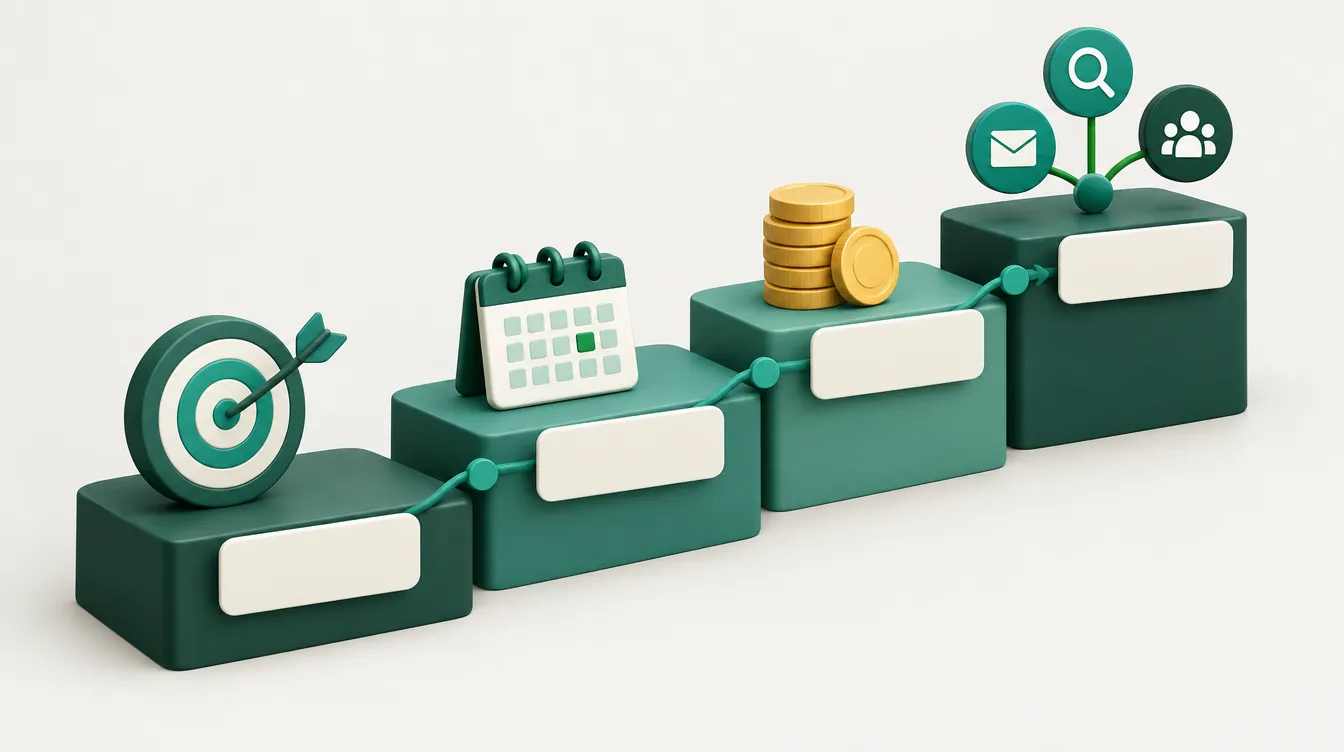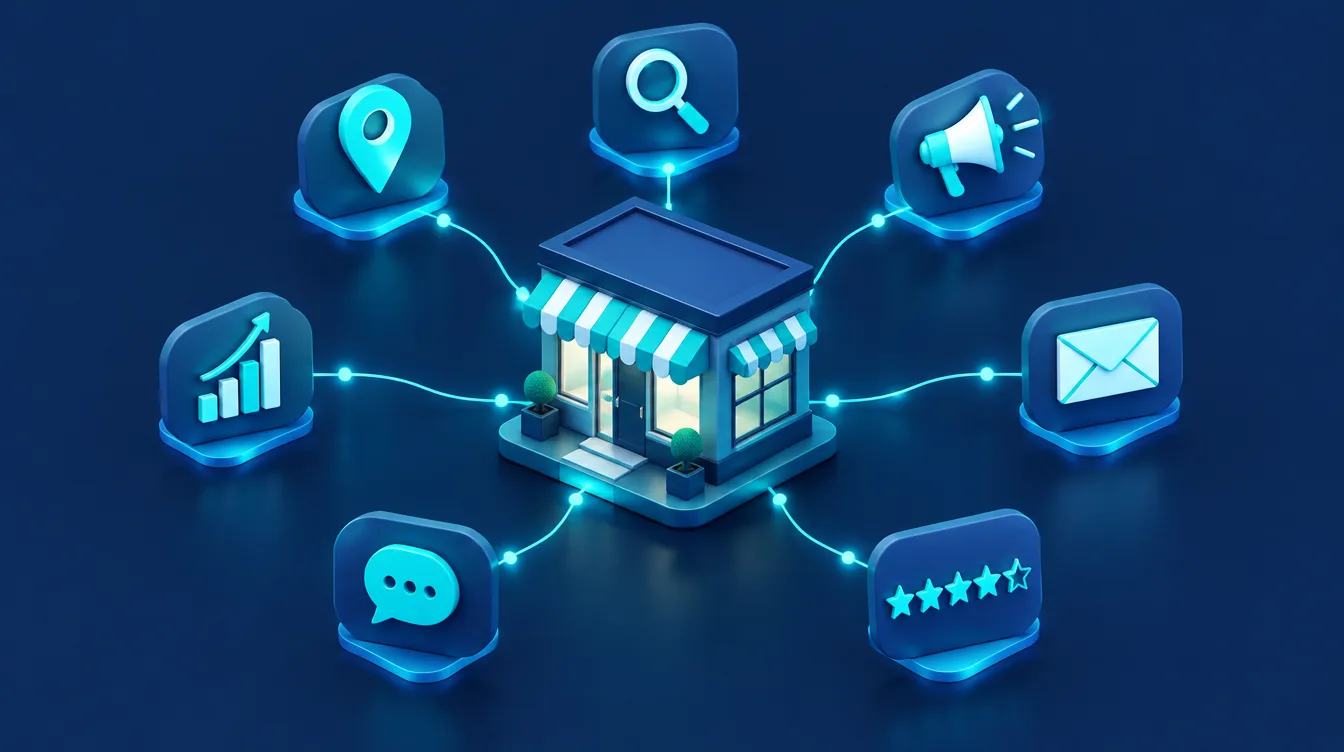
How do you promote your business online? Start where customers are already looking for you: a solid website, a complete Google Business Profile, reviews and search (SEO and PPC ads). Only then add social media, email and content. Several channels are free and cost only your time, and paid advertising can start at a few euros a day. What matters is how much one enquiry costs you, not how many channels you use.
In short:
- Without a website that turns visits into enquiries, promotion just sends people into a dead end.
- Free (your time only): Google Business Profile, reviews, social media without ads and email on a tool's free plan.
- Paid ads: Meta recommends starting with at least USD 5 a day, LinkedIn requires at least USD 10 a day, and Google Ads sets no minimum.
- A small business on a limited budget usually does better with 3–4 channels done properly than ten done halfway.
- Measure enquiries and orders by channel, otherwise you will not know what you are paying for in vain.
Before you start: three questions that save money
Promoting a business online is not a checklist to tick off. Before choosing channels, answer three questions. They are covered in more depth in our guide to building a marketing strategy.
- 1Who is your customer and where do they look? People search for a plumber on Google and Maps the moment a pipe bursts. They discover a wedding photographer on Instagram months in advance. Business buyers find suppliers through LinkedIn and referrals.
- 2What should promotion deliver? Phone calls, form enquiries, online orders or awareness of a new brand? Each goal leads to different channels and different measurement.
- 3How much can you invest in money and in time? Free channels cost hours every week. Paid channels cost money but deliver results faster. Work out how much you can afford to pay for one enquiry or order so that the job still pays off.
How to promote your business online: 10 channels at a glance
| Channel | Cost | When it shows results | Best suited for |
|---|---|---|---|
| 1. Website | one-off build, then maintenance | the foundation for everything else | every business |
| 2. Google Business Profile | free | days to weeks | local services and premises |
| 3. Reviews | free | ongoing | every business |
| 4. SEO | time or agency management | 3–6 months and longer | a steady flow of enquiries |
| 5. Search PPC | click budget + management | from day one | demand that already exists |
| 6. Social media ads | budget + creative | from day one | visual products, new brands |
| 7. Organic social media | time | months | relationships and trust |
| 8. Email marketing | free to tens of euros a month | weeks | repeat purchases, B2B |
| 9. Content and blog | time or a copywriter | months | services that need explaining |
| 10. LinkedIn | time, ads from USD 10 a day | weeks to months | B2B |
1. A website that turns visits into enquiries
Every other channel sends people to your website. If it is slow, hard to use on mobile or lacks a clear call to action, you pay for visits that bring nothing. The minimum: clearly described services, prices or at least a guide range, references, a short form and conversion tracking. For campaigns, a dedicated landing page with a single goal pays off. If your website does not meet even the basics, start with building a website, not with advertising.
2. Google Business Profile
For local businesses, this is the cheapest way to appear in search and on maps. A Google Business Profile is free, and you cannot buy a better position in local results – relevance, distance and prominence decide. Other search engines have similar listings, such as Bing Places. Step-by-step setup is covered in our article on local SEO.
3. Reviews
Reviews decide which business in the map results a customer clicks on. The simplest system: after every completed job, send the customer a short email or text with a direct link to leave a review. Reply to all reviews, including critical ones – factually and calmly. Bought or fake reviews break platform rules and, under EU consumer protection rules, count as an unfair commercial practice.
4. SEO: search traffic without paying per click
SEO (search engine optimisation) brings people who are actively looking for what you offer. Results come more slowly, typically within a few months, but they do not stop when the budget runs out. The basics are a technically healthy website, pages answering the questions customers actually search for, and links from other websites. Practical steps are summarised in how to increase website traffic.
5. PPC search ads
A search ad appears the moment someone types a query such as “accountant near me”. You pay per click, and traffic arrives as soon as the campaign starts. Google Ads sets no minimum budget: you set an average daily budget, the campaign may spend up to twice that on a given day, but over a month you will not pay more than 30.4 times the daily amount. In the Czech Republic, advertisers also use Sklik, the ad system of the local search engine Seznam, with a minimum of CZK 30 a day per campaign. Our Google Ads guide walks through setup, and SEO vs. PPC explains the difference between paid and organic search.
6. Facebook and Instagram ads
Ads on Meta reach people who are not looking for you yet but could become customers based on interests, age or location. They suit visual products, promotions and new brands. On its pricing page, Meta recommends starting with a budget of at least USD 5 a day and running ads for more than six days. For a budget by goal, see how much Facebook and Instagram ads cost. You can show ads again to people who have already visited your site – that is remarketing, usually the cheapest source of orders from paid advertising.
7. Organic social media
Organic reach of business pages is small these days, so social media without ads serves trust-building more than direct sales. Before enquiring, customers often check your profile to see whether the business is active, what your work looks like and how you communicate. One or two networks where your audience spends time, and a posting rhythm you can keep up, are enough. Tips for individual platforms are in our guides to social media marketing and Instagram for business.
8. Email marketing
Email is a channel you own, not a social media algorithm. It works best with existing customers: service reminders, seasonal offers, news for subscribers. Many tools offer a free plan for small lists – Ecomail, for example, is free for up to 200 contacts (November 2026). Mind the rules: in the EU, you can generally send marketing emails without consent only to your own customers about similar products. More in our email marketing guide.
9. Content and blog
Articles, how-tos and answers to common questions support SEO, give you material for social media and newsletters, and help customers arrive better prepared. They pay off most for businesses whose service needs explaining (renovations, finance, software). The principle is described in our glossary entry on content marketing. Write about the questions customers actually ask you, not topics that only interest you.
10. LinkedIn for B2B
If you sell to businesses, LinkedIn lets you reach decision-makers by job title, industry and company size. A personal profile of the owner or a salesperson posting regularly from practice often works better than a company page. LinkedIn advertising costs more than Facebook: the minimum daily budget is USD 10 for any ad format, so it pays off mainly for higher-value deals.
How much does it cost to promote a business online?
There is no universal price. The total cost has three parts: ad spend (paid directly to Google or Meta), work (your hours, or management by an agency or freelancer) and tools (email, design, analytics). Indicative model levels for a small business:
| Level | Typical channels | What you pay for |
|---|---|---|
| Start | website, Google Business Profile, reviews, one social network | mainly your time, free tools |
| Growth | + search PPC, remarketing, newsletter | ad budget by industry + campaign management |
| Expansion | + SEO and content, social ads, LinkedIn for B2B | more channels at once, long-term content work |
Do not base your ad budget on the minimum, but on a target cost per enquiry. If a job earns you EUR 150 in margin and one in three enquiries turns into a job, an enquiry must not cost more than EUR 50. PPC management at Weboptim starts at EUR 190 a month excluding VAT, as does SEO – it pays off when your budget or the potential value of jobs clearly exceeds that amount.
Model example (fictional)
A small accounting firm wants more business clients. It starts by adding a pricing page and a form to its website, completing its Google Business Profile and asking clients for a review after each annual tax return. In the second month, it launches Google Ads on queries like “accountant in [city]” with a daily budget of EUR 10. After three months, Google Analytics 4 shows that most enquiries come from the map and search ads, while Facebook brought none. The firm moves the Facebook budget to search and starts writing articles about tax changes for sole traders.
How to tell whether your promotion works
Likes and visits say nothing about revenue. Track how many enquiries, calls or orders each channel brought in and how much each one cost.
- Conversion tracking: in Google Analytics 4, set form submissions, phone clicks and purchases as key events.
- UTM parameters: tag links in newsletters, on social media and in directories so they do not merge into one bucket in GA4.
- Source of phone calls: ask customers where they found you and write it down. For local services, the phone is often the main channel.
- Review after 2–3 months: cut back any channel that does not bring enquiries at an acceptable cost after a fair test, and move the money elsewhere.
Common mistakes when promoting a business online
- Ads pointing to a weak website: paid visitors leave because prices, references or a simple form are missing.
- Everything at once: ten channels with a few hours a month deliver less than three channels done properly.
- Judging by gut feeling: without conversion tracking, the budget follows what is visible, not what sells.
- An incomplete map listing: missing opening hours, photos and categories reduce the chance of appearing in local results.
- Inconsistency: a social profile whose last post is a year old looks worse than no profile at all.
When to hand promotion over to a professional
You can handle the basic channels yourself: Google Business Profile, reviews and one social network. Bringing in a professional pays off when you spend hundreds of euros a month on ads, when you do not know which channel brings enquiries, or when you simply have no time left for promotion. At Weboptim, we have 50+ projects and 9+ years of experience behind us. We set up tracking, choose channels to fit your budget and take care of PPC campaigns, SEO and social media marketing.
Frequently asked questions
How can I promote my business online for free?
How much does online business promotion cost?
Which channel is best for a small business?
How long does it take for promotion to show results?
Should I promote my business myself or use an agency?
Sources

Written by
Peter GáboríkProject Manager – AI, Automation & SEO
Project manager and founder of Weboptim. Builds growth strategies around SEO, automation and AI; in online marketing since 2017.
Related service
Tips that save time – once a month
One e-mail a month: a new guide, the automation of the month and one number from practice. No spam.