Online marketing is promoting your business over the internet – in search engines, on social media, by email and through content on your website – with the advantage that for most activities you can measure what a visit, an enquiry or an order costs. This article covers what online marketing includes, its main channels, how to start in five steps and how to measure results.
What is online marketing
Online marketing (also called digital or internet marketing) is promoting a business, its products and services over the internet: in search engines, on social media, by email, through content on your website and via partner sites. Unlike a flyer or a billboard, almost every step can be measured, so you know what a visit, an enquiry or an order costs you.
Marketing as a whole decides who you sell to, what, at what price and through which route. Online marketing is the part that turns those decisions into internet channels. Digital marketing is a slightly broader term: besides the internet it also covers other digital channels such as SMS or digital screens. In everyday use, though, the two terms are treated as synonyms.
The main online marketing channels
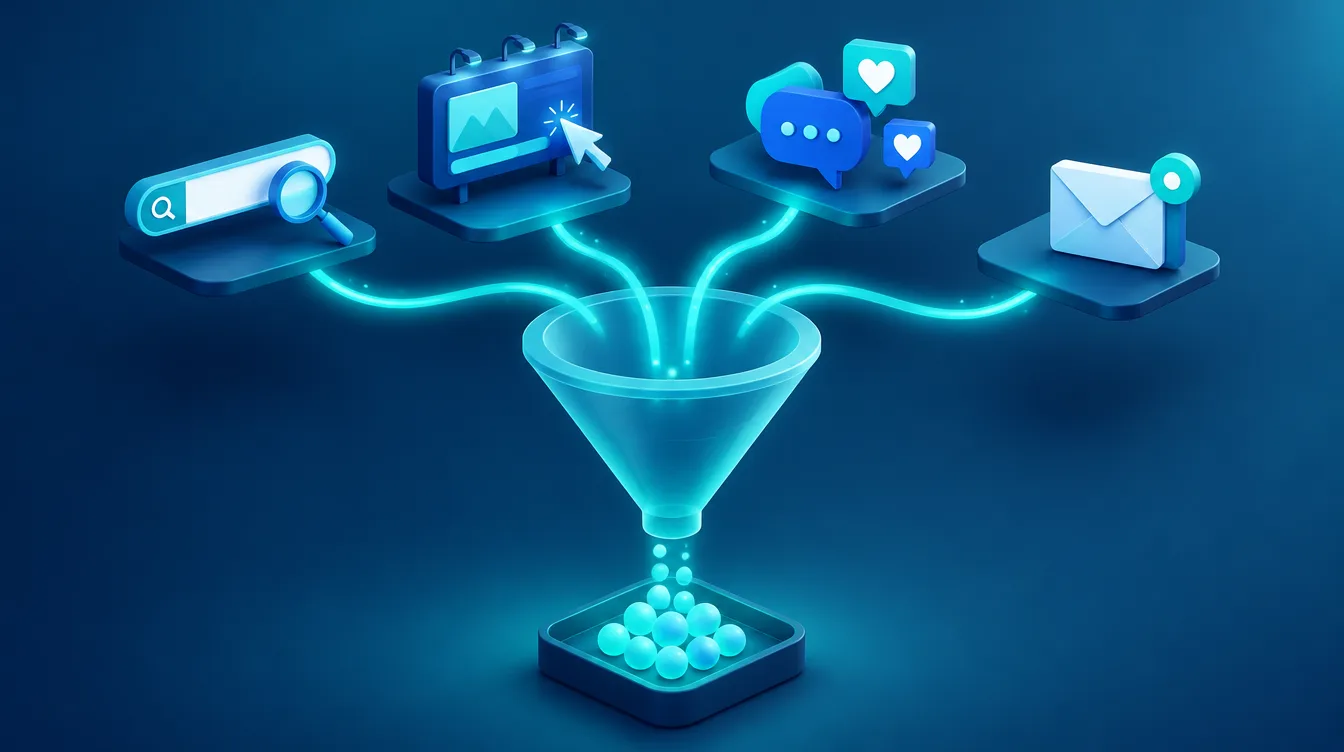
Each channel plays a different role. Few businesses need all of them at once; what matters is that they connect and lead to the same goal. For an overview of ten channels with indicative costs for a small business, see how to promote your business online.
- SEO (search engine optimisation) – work on your website, content and links that gets you into the unpaid search results on Google. Results take months, but you do not pay per click. We handle it long term as part of our SEO services.
- PPC advertising – paid ads in search engines and on social media (Google Ads, Meta Ads; for the Czech market also Sklik, the ad platform of the Czech search engine Seznam). In search you pay per click and traffic arrives as soon as the campaign goes live. Our Google Ads campaign setup guide walks through the steps, and we can take over day-to-day PPC management.
- Social media – building awareness and relationships with customers on Facebook, Instagram, LinkedIn or TikTok, both organically and with paid ads. What works for smaller businesses is covered in our social media marketing guide.
- Email marketing – newsletters and automated emails to people who have given you consent. You work with your own contact list, so you pay for the sending tool rather than an ad platform. More in our email marketing guide.
- Content marketing – articles, how-to guides, videos and comparisons that answer customer questions and support both SEO and social media. The principle is explained in the glossary entry on content marketing.
- Affiliate marketing – partners promote your products and earn a commission on sales. You pay only for results, but you need reliable tracking; see how affiliate marketing works.
What is SEO marketing and how it differs from PPC
SEO marketing means winning customers from the unpaid (organic) search results: you create content around questions people actually search for and keep the website technically sound so search engines can show it well. With PPC you pay for every click – traffic arrives immediately but stops when the budget does, whereas SEO takes months to build and well-maintained content keeps bringing visits long after publication. That is why most businesses combine the two: PPC for quick enquiries and for testing which keywords sell, SEO for traffic that costs less over time. For an overview of other channels and the order in which to use them, see how to increase website traffic.
For a detailed comparison of cost, speed and return, see SEO or PPC: what pays off.
How to start with online marketing in 5 steps
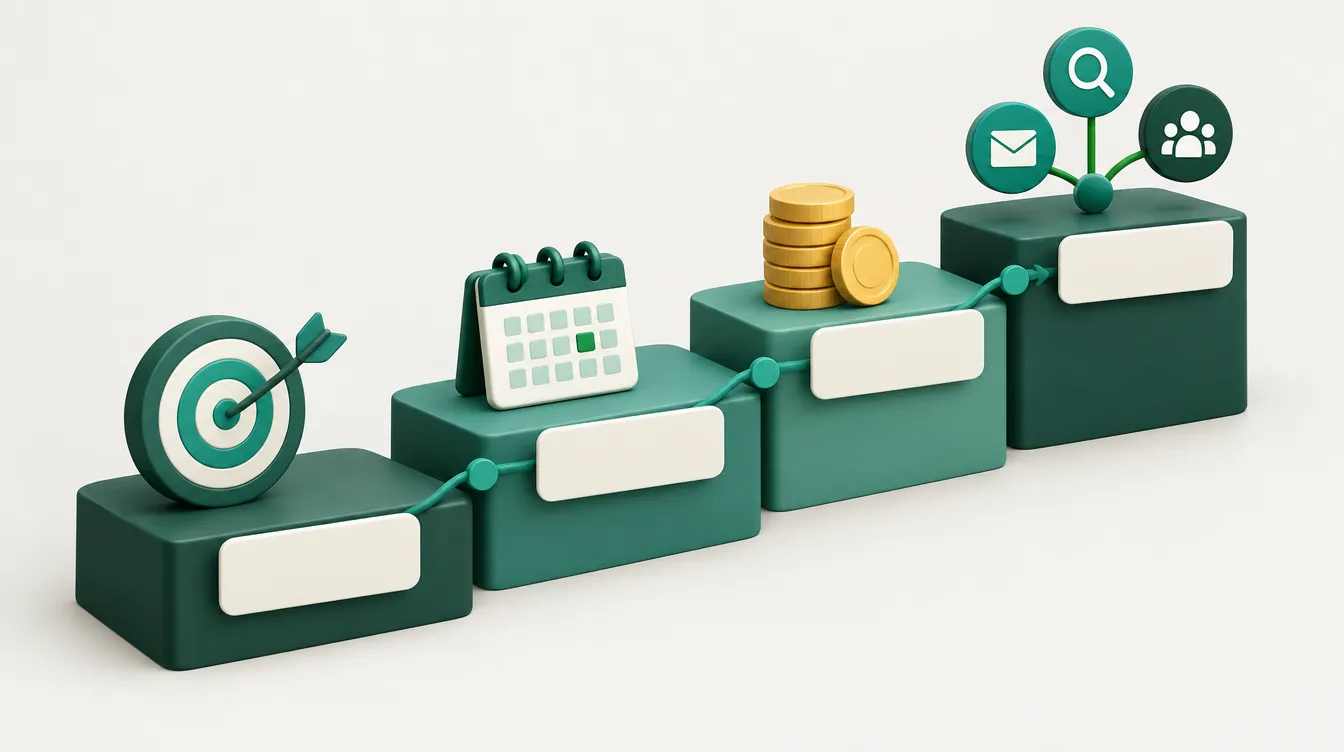
- 1Set a goal and define your conversion. An enquiry, an order, a booking or a phone call. Use your margin and average order value to work out how much you can pay for one conversion and still make money.
- 2Describe your customer and your offer. Who you sell to, what problem you solve, at what price and where the customer looks for you. The 4P and 7P marketing mix framework helps here.
- 3Write a strategy and pick one or two channels. Start where customers are already actively searching (usually search engines) and add other channels gradually. The process is covered in how to build a marketing strategy.
- 4Prepare your website and tracking. The site has to explain the offer clearly, load quickly and have an obvious contact form or checkout. Set up tracking before you launch any campaigns, otherwise you will have nothing to compare against.
- 5Launch, review and move the budget. Check results at least once a month, and every week during the first weeks of paid advertising. Shift money into the channels that bring enquiries at an acceptable cost.
How to measure results: marketing KPIs
KPIs in marketing are the metrics that tell you whether a channel meets a business goal: the number of enquiries or orders, cost per conversion, conversion rate and return on ad spend (ROAS). Traffic, follower counts or email open rates are supporting metrics and say nothing about revenue on their own. Collect the data in Google Analytics 4, where you mark important actions as key events, and compare them with the cost of each channel.
When to bring in a specialist
If you cannot give marketing regular attention, or you pay for advertising without knowing what it brings in, it is worth handing it to specialists. At Weboptim we have delivered more than 50 projects and have over 9 years of experience in SEO, PPC, email marketing and social media.
Looking for a marketing case study? Projects where we built the website with SEO and lead generation in mind from day one are in our work.
Frequently asked questions
What is online marketing?
What is the difference between online and digital marketing?
What is SEO marketing?
How much does online marketing cost?
Which online marketing channel should I start with?
Sources

Written by
Peter GáboríkProject Manager – AI, Automation & SEO
Project manager and founder of Weboptim. Builds growth strategies around SEO, automation and AI; in online marketing since 2017.
Related service
Tips that save time – once a month
One e-mail a month: a new guide, the automation of the month and one number from practice. No spam.